Not long ago, leadership hiring ran on Rolodexes, referrals, and personal memory. Senior partners carried influence because they knew the right people, not because they had the best data. That model worked in a slower world. In 2026, it feels dangerously incomplete.
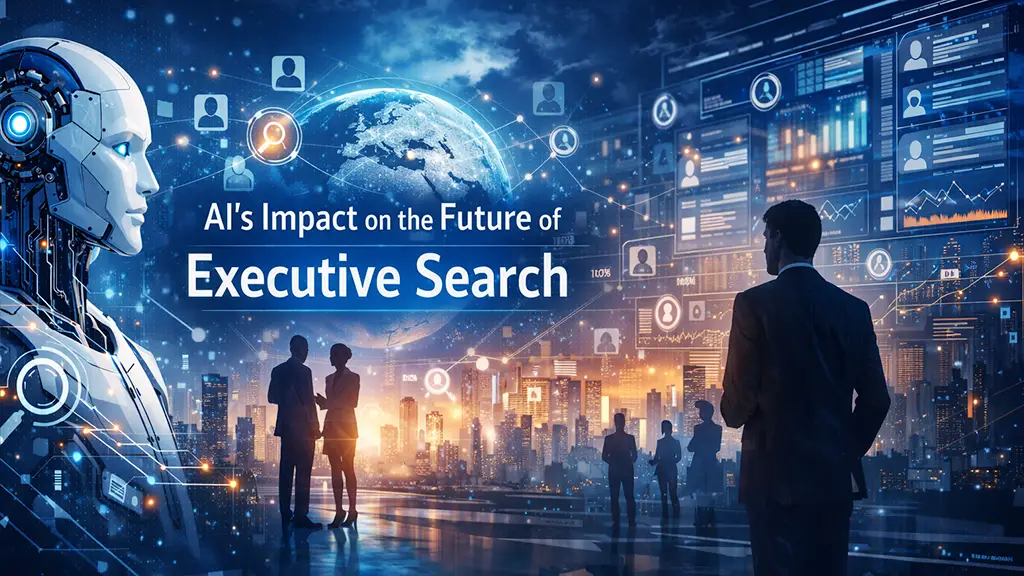
AI in executive search has changed expectations across boardrooms. Speed, evidence, and foresight are now baseline requirements, not differentiators.
This shift does not remove humans from the process. Instead, it redraws the lines of value. Technology now owns the science of discovery, while people master judgment, negotiation, and cultural nuance. The future belongs to teams that know how to balance both.
From Manual Mapping to Predictive Intelligence
How Executive Search Has Changed at the Starting Line
Traditional Executive Search once began with static market maps and educated guesses. Today, it starts with live intelligence. Modern systems continuously track leadership movement by monitoring:
- Global executive appointments and exits.
- Patent filings and innovation signals.
- Earnings calls, acquisitions, and restructuring activity.
- Industry sentiment across news and analyst coverage.
This creates a constantly refreshed view of who is shaping markets, not just who is visible.
Predictive Attrition: Seeing the Move Before It Happens
One of the most powerful shifts is predictive attrition. Algorithms analyze career cycles, company maturity stages, and peer movement patterns to identify when a C suite leader may be approaching an inflection point.
With AI-driven executive search, firms no longer wait for candidates to apply. They engage leaders months before intent becomes public. The practical impact is speed with substance. Search kickoff timelines shrink from weeks to days, while relevance improves instead of declines.
The Death of the Resume: Behavioral and Contextual Matching
Why Titles No Longer Tell the Full Story
Resumes were designed for linear careers. Leadership today is anything but linear. That is where the role of AI in executive hiring becomes visible. Instead of scanning keywords, systems evaluate trajectory by asking better questions:
- What changed during this leader’s tenure?
- How did teams perform under pressure?
- Did innovation accelerate or stall?
- What happened to trust, retention, and credibility?
This approach shifts assessment from credentials to consequences.
Cultural Fit Without Guesswork
Advanced tools now analyze public discourse, interviews, shareholder letters, and panel discussions to understand leadership style. Some platforms go further by simulating team dynamics, modeling how a potential CEO might interact with an existing board.
Rather than relying on chemistry alone, Executive Search teams can evaluate alignment with clarity. The result is fewer surprises after placement and stronger long term outcomes.
Solving the Diversity Gap with Algorithmic Objectivity
Expanding the Talent Lens
Bias often enters hiring through familiarity. Same schools. Same companies. Same networks. AI in executive search helps counter this pattern by anonymizing irrelevant demographic signals and prioritizing measurable leadership outcomes.
This enables discovery across:
- Non traditional industries.
- Emerging markets.
- Adjacent leadership functions.
- Overlooked career paths.
Talent that once sat outside the spotlight becomes visible and competitive.
Where Humans Still Matter
Technology alone does not guarantee fairness. Human oversight ensures transparency, audits decision logic, and challenges assumptions. Ethical leadership hiring requires accountability. Algorithms must be questioned, not worshipped.
The Human in the Loop: Why the High Touch Matters More Than Ever
From Recruiter to Strategic Advisor
As automation absorbs scheduling, coordination, and early screening, consultants gain time for higher value work. This is where the future of executive search truly differentiates. Search partners now focus on:
- Board alignment and expectation setting.
- Interpreting data into clear narratives.
- Coaching candidates through complex decisions.
- Managing risk and succession optics.
This evolution turns recruiters into trusted advisors.
What Machines Still Cannot Do
Negotiating compensation, managing identity shifts, and supporting family decisions require emotional intelligence. A machine cannot read hesitation in silence or confidence in a story. Even the most advanced AI-driven executive search cannot convince a content CEO to relocate their family without trust. Human presence closes deals. Data simply opens doors.
Looking Ahead: Preparing Your Board for AI Driven Search
Practical Steps for 2026 Readiness
Boards that want results must prepare intentionally. The future of executive search favors organizations that invest early and wisely.
Key priorities include:
- Maintaining clean, structured talent data.
- Partnering with firms using advanced intelligence platforms.
- Demanding transparency in candidate shortlisting.
- Prioritizing leaders fluent in technology and people.
Hybrid leadership is no longer optional. Executives must know how to question data while staying grounded in judgment.
Summing Up
AI accelerates leadership decisions, but responsibility still sits with people. Tools inform choices, they do not replace judgment. Is your leadership strategy ready for 2026?
Partner with Skilligent to experience executive search that blends intelligence, insight, and human trust to build leadership teams that actually last. Contact us today!
Frequently Asked Questions
1. How is AI changing executive search today?
AI is shifting executive search from intuition led discovery to intelligence led decision making. It enables faster market mapping, predictive insights, and deeper candidate evaluation while allowing consultants to focus on judgment, relationships, and strategy.
2. Does AI replace human decision making in leadership hiring?
No. AI supports the process by handling data heavy tasks, but final decisions depend on human context, cultural understanding, and negotiation skills.
3. How does AI improve candidate assessment beyond resumes?
AI evaluates leadership impact through performance patterns, communication style, and behavioral signals rather than titles or keywords. This helps organizations understand how a leader actually operates in real world conditions.
4. Can AI help improve diversity in executive hiring?
Yes, when used responsibly. AI can reduce bias by focusing on competencies and outcomes instead of pedigree or familiarity. Human oversight ensures ethical use and transparent decision making throughout the search.
5. What should boards do to prepare for AI enabled executive search?
Boards should invest in clean talent data, partner with firms using advanced intelligence platforms, and prioritize leaders who are comfortable working with technology and people.
Phone : +91-9886395204 | Email : info@skilligent.in