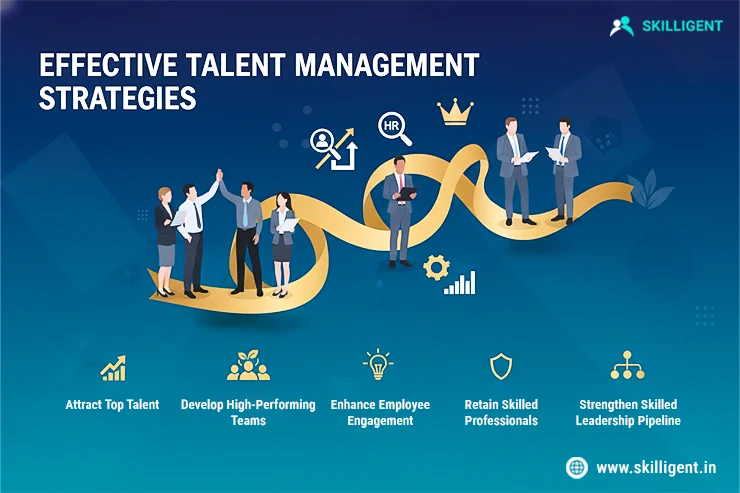
Talent management has evolved into a critical business function that directly impacts organizational success and competitive advantage. Companies that master effective talent management strategies gain the ability to attract top performers, reduce turnover, and build a workforce capable of driving innovation.
Whether you’re managing a startup or an established enterprise, understanding how to optimize your talent pool through strategic workforce planning and employee engagement is essential. This blog is all about exploring proven talent management strategies that transform your HR function into a growth engine for your organization.
Building a Strong Talent Pool Through Strategic Workforce Planning
The foundation of any successful talent management approach begins with workforce planning. Organizations must assess current capabilities, identify skill gaps, and anticipate future talent needs before they become critical. Strategic workforce planning ensures you’re not just filling positions but building a pipeline of qualified candidates aligned with your business objectives.
Your talent pool becomes significantly stronger when you invest in identifying high-potential employees early. This involves:
- Mapping critical roles and successor readiness across departments
- Identifying skill requirements for future growth areas
- Creating pathways for internal mobility and career progression
- Building relationships with external talent networks for specialized roles
When your organization maintains a well-developed talent pool, you reduce time-to-hire and improve the quality of your workforce. This proactive approach to talent optimization prevents the costly disruptions that occur when key positions remain vacant.
Driving Employee Engagement as a Talent Management Priority
Employee engagement directly correlates with retention rates and productivity levels within organizations. Effective talent management strategies recognize that engaged employees are more likely to contribute their best work and remain committed to organizational goals.
Creating an environment where team members feel valued, heard, and invested in company success becomes your competitive advantage.
Organizations implementing strong employee engagement initiatives typically experience:
- Higher retention rates among top performers
- Increased productivity and output quality
- Stronger collaboration across teams
- Better alignment with company culture and values
Employee engagement programs should extend beyond annual reviews. Regular feedback loops, recognition systems, and opportunities for skill development keep your workforce motivated and connected to organizational objectives.
Optimizing Performance Through Continuous Talent Development
Talent optimization requires a commitment to continuous learning and development. Organizations that invest in upskilling their workforce demonstrate significantly stronger performance metrics and employee satisfaction. Whether through mentoring programs, formal training, or cross-functional projects, creating opportunities for growth keeps your talent competitive and engaged.
Your approach to talent management should include structured development plans that align individual career aspirations with organizational needs. This creates mutual value and strengthens the bond between employee and employer.
Connect With Our HR Talent Solutions
Building and maintaining an effective talent management system demands expertise, strategic planning, and dedicated resources. Skilligent specializes in helping organizations develop comprehensive talent management strategies that align with your unique business objectives.
Whether you’re looking to strengthen your workforce planning capabilities, enhance employee engagement, or optimize your talent pool, our HR talent solutions are designed to deliver measurable results.
Ready to transform your approach to talent management? Connect with our team today to discover how strategic workforce management can drive your organization forward.